
Amazon Return Policy 2026: FBA & FBM Rules, Fees & How to Protect Your Margins
Amazon's return policy changed in 2026. New fees, extended return windows, and high-return-rate thresholds are cutting seller margins. Here's for sellers.

Samaa
December 26, 2025Amazon's return policy has changed significantly for sellers in 2026. Whether you're FBA or FBM, understanding the current rules around return windows, processing fees, and high-return-rate thresholds is essential to protecting your margins this year.
Here's what changed and what it means for your business.
Amazon return policy 2026 quick reference table
T
| Topic | Detail |
|---|---|
| Standard return window | 30 days from delivery (most categories) |
| Holiday return window | Items bought Nov 1 – Dec 31 returnable until Jan 31, 2026 |
| High return rate fee | Charged per unit when return rate exceeds category threshold |
| FBA return processing | Amazon handles automatically — fee deducted from seller account |
| FBM minimum return policy | Must match or exceed Amazon's standard 30-day window |
| Returnless refund | Amazon may issue refund without requiring item return for low-value items |
| Unsellable returned items | Reimbursed at reduced rate or requires removal order |
| Apple products holiday window | Shorter — returns accepted until Jan 15, 2026 |
What is new Amazon return policy processing fee for 2026?
The Amazon return policy 2026 returns processing fee charges sellers for products (excluding apparel and shoes) that exhibit return rates above a category-specific threshold, aiming to offset operational costs and reduce waste.
- Application: The fee is applied per returned unit exceeding this threshold.
- Calculation: It is based on the product's size tier and shipping weight.
- Impact: This directly impacts profitability for high-return items.
We've seen this coming. Amazon's fulfillment centers aren't free. The sheer volume of returns—some legitimate, many borderline fraudulent—costs real money. Now, that cost is landing on you.
How to track this:
- Amazon states you can review your product's return rate on FBA Returns.
- This data is updated three times a week.
- Our Advice: You should be checking it constantly. Your livelihood depends on it. We consistently advise sellers to monitor these metrics like hawks.learn how to reduce return costs and protect account health.
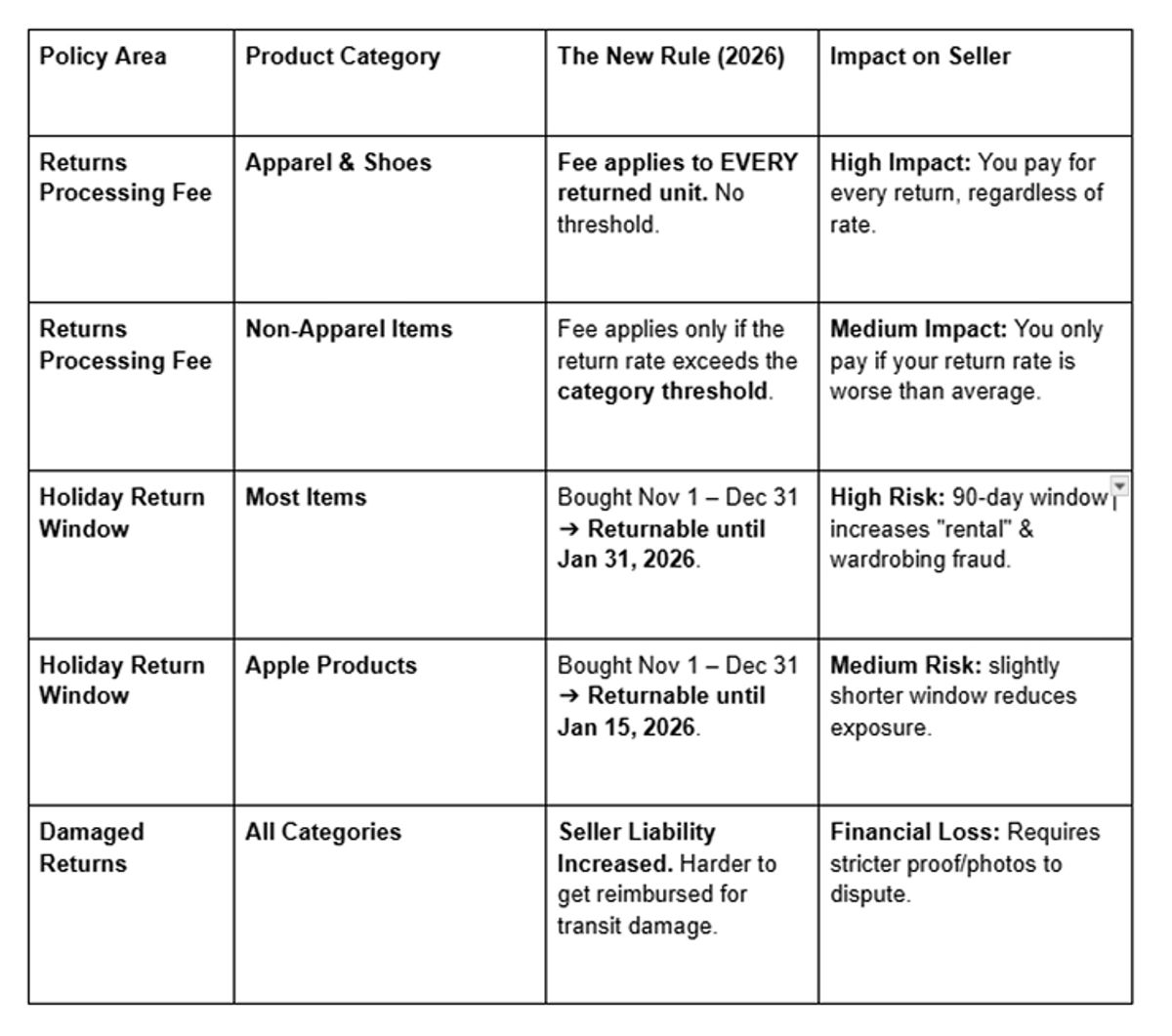
The Extended Holiday Return Window according to Amazon return policy
Every holiday season, Amazon extends its return window. For 2025, purchases made between November 1 and December 31 are returnable until January 31, 2026. That's nearly three months for some items.
While Amazon frames this as "customer-friendly," it's a prolonged nightmare for sellers. This extended window provides ample opportunity for:
- "Wardrobing" (Buying, wearing, and returning).
- "Item switching" (Returning an old item in a new box).
- Other forms of buyer abuse.
Why is Amazon extending its holiday return window until January 31, 2026 according to Amazon return policy?
Amazon extends its holiday return window through January 31, 2026, to enhance the shopping experience during peak gift-buying periods.
- The Goal: Reduce buyer hesitation and boost sales.
- The Cost: It creates a longer exposure period for sellers to potential return fraud and increased operational costs.
- The Reality: Someone buys a product in early November, uses it for a special event in December, then sends it back in late January. Perfectly within Amazon return policy.
Who pays for the used item? You do. This is a direct pipeline for increased costs and potential negative reviews if you challenge these questionable returns.Note: Apple products have a slightly shorter window (Jan 15, 2026). This tells you Amazon can differentiate; they just choose not to for most sellers.
Increased Seller Liability: Damaged Returns are Your Problem Now
Amazon has been progressively shifting liability for damaged inventory to sellers. The 2025 updates already transferred additional responsibility for Amazon-fault damaged units. This trend continues into 2026.
If a customer returns an item damaged during transit or deemed unsellable:
- Often, that cost falls on you.
- We’ve seen countless cases where a perfectly good product leaves your warehouse, gets returned in tatters, and Amazon simply processes the refund.
- Your recourse? Often, none. Or a convoluted support ticket that goes nowhere.
How to prepare:
- Meticulous Documentation: This is non-negotiable.
- Robust Packaging: Ensure high-value items are secure.
- Rigorous Audits: Don't just accept Amazon's word. Ask: Does the returned item match the original? Is it genuinely damaged, or merely opened?
You can avoid suspensions and Amazon return policy violations by reading this.
The Automated Return Machine
Amazon return policy centers are optimized for speed, not accuracy. This means items often get processed without genuine inspection.
Common issues that slip through the cracks:
- Broken products.
- Swapped items.
- Empty boxes.
We've seen it time and again. The customer clicks "return," Amazon issues a label, and the refund process begins. No questions asked. This "honor system" is a breeding ground for fraud.
Amazon's Insufficient Tools:
- Opting out of auto-generated return labels for items over $100.
- Requiring photos for certain claims.
- The "Warning Label": A label for "frequently returned items" might appear on your listing, effectively killing its sales. This is Amazon telling you your product is the problem, not their lax policies.
What can you do?
- Monitor Reports: Look for patterns in return reasons.
- Spot Red Flags: Are customers consistently claiming "defective" when the item is fine?
- Engage Support: Gather evidence and engage Seller Support, even though it is frustrating.
Negative Reviews from Return Friction: A Silent Killer
Here's where the rubber meets the road for us. A problematic return—whether due to a genuine product issue or buyer abuse—often leads to a negative review.
The Cycle of Damage:
- A customer might return an item they misused.
- They leave a scathing review blaming your product's quality.
- The average buyer sees a 1-star review and moves on.
- Result: Your brand reputation takes a hit, and sales tank.
You can chech also :
Strategies for US Sellers in the 2026 Amazon return policy
- Master Your Data: You need to understand your return rates at a granular level. Which ASINs are exceeding thresholds? Investigate the "why" behind every return.
- Optimize Listings: Clarity is king. Detailed product descriptions, accurate images, and clear sizing charts can reduce "not as described" returns. Manage expectations—don't oversell.
- Fortify Packaging: If FBA is handling your shipping, ensure your products can withstand the journey multiple times. Flimsy packaging leads to "damaged in transit" returns, which become your problem.
- Engage Proactively with Seller Support (Carefully): Document return abuse and engage support. Be persistent, provide clear evidence, and cite Amazon return policy, Never assume they're on your side.
- Monitor & Protect Your Reviews: This is non-negotiable. Negative reviews directly impact your sales and ranking. Implement a robust review management strategy.
- Understand Consumer Rights: Familiarize yourself with The Federal Trade Commission resources on consumer rights, though Amazon's terms often supersede.
- Analyze Industry Trends: Stay informed about broader e-commerce return trends and fraud statistics from organizations like the The National Retail Federation
Returns leading to unfair negative reviews?
A common pattern in 2026: customers return items, then leave a negative review anyway. If you're dealing with reviews that misrepresent your product or violate Amazon's community guidelines, Bluebug can help you get them removed legally and compliantly.
Sellers dealing with unfair negative reviews linked to return disputes can explore Bluebug's Amazon review removal service for a compliant removal process.
Frequently Asked Questions
- The Amazon return policy introduces processing fees for products with high return rates.
- It extends holiday return windows, shifting financial liability to sellers.
- It makes it essential to improve product quality and inventory management to protect margins.
- You can charge a restocking fee (typically 20–50%) if a buyer returns an item that is damaged, used, or missing parts.
- Restriction: You cannot charge fees for returns caused by seller error, defective products, or items returned in their original condition within the policy window.
- FBA Sellers: Can request reimbursement if Amazon accepts responsibility.
- FBM Sellers: Can deduct a restocking fee (up to 50%) if the item is returned in a different condition than sent, provided they have photo evidence.
- Eliminate buyer confusion by adding detailed sizing charts, 360-degree images, and compatibility guides.
- Regularly audit your "Voice of the Customer" dashboard to identify and fix recurring quality defects before they trigger fees.
Conclusion: The Only Constant is Change (and Your Need for Protection)
Amazon return policy overhaul is a stark reminder: you're operating on their turf, by their rules. These changes aren't designed to make your life easier; they're designed to streamline Amazon's operations and push costs downstream.
Your profits, your reputation, and your business are under threat from:
- Policy shifts.
- Relentless buyer-centric biases.
- Inevitable fraudulent returns.
Don't get caught flat-footed. Proactive management of your return data, meticulous attention to product quality, and an ironclad strategy for combating negative feedback are no longer optional—they are survival tactics.
When fraudulent returns cause unfair reviews, you need experts who fight back.
In Bluebug.io. We specialize in exactly that. Don't let a bad return sink your sales and reputation.
Keep reading
How to sell products on amazon: Your 2026 Definitive UK Guide
How to sell products on amazon: Learn how to sell products on Amazon in 2026 with our comprehensive UK guide. Master setup, strategies, and review. Learn more.
Star rating calculator: Boost Amazon Sales & Remove Negative Reviews
Use our Star rating calculator to achieve your target rating on Amazon. Learn legal strategies to improve reviews and remove negative feedback for UK sellers.
Amazon sales business: Your 2026 Guide to Profit & Brand Protection in the UK
Master your amazon sales business in 2026 with our comprehensive UK guide. Learn models, strategies, and how to protect your brand. Contact Us today!